

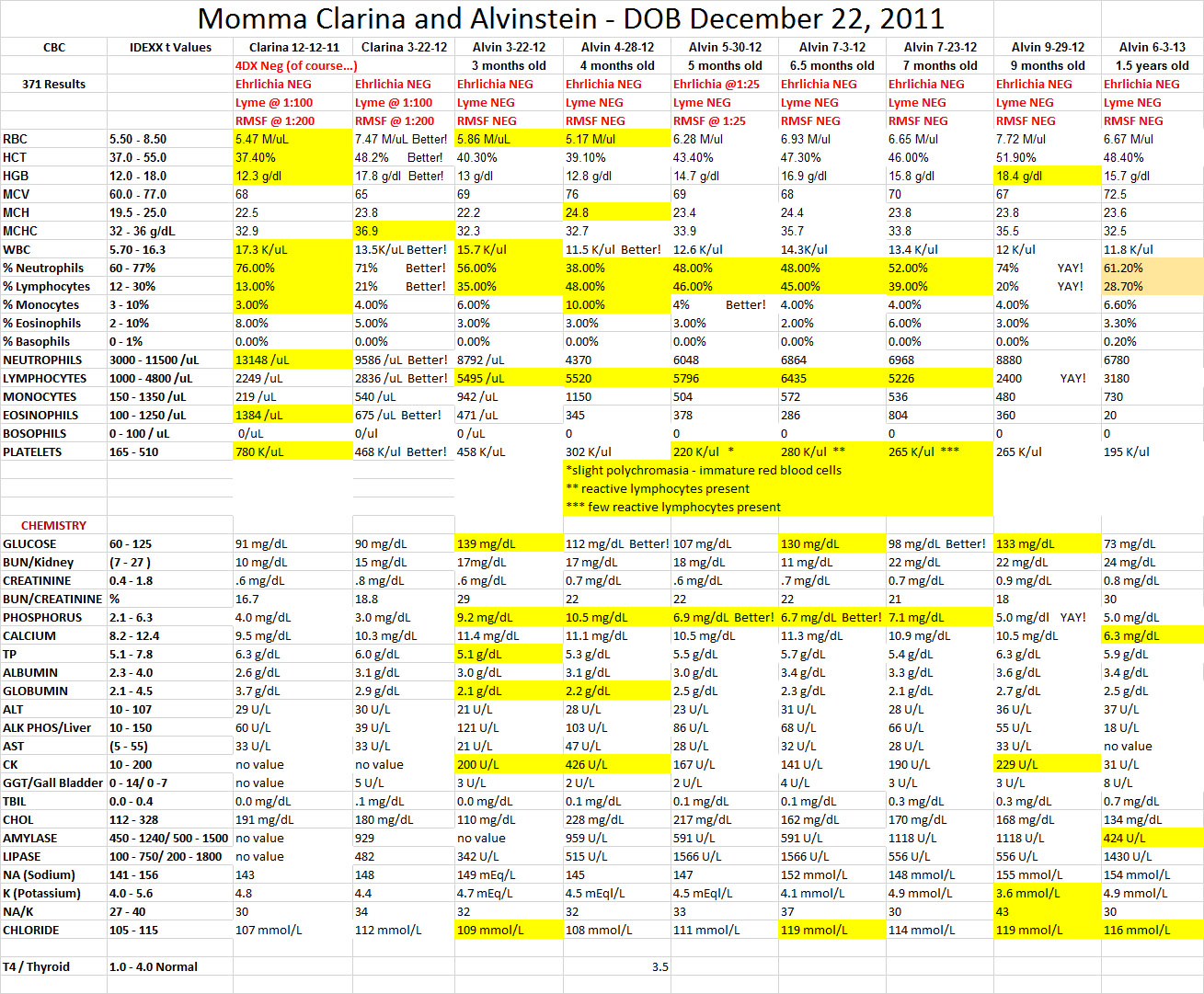
The past few years we have been very concerned about how many young pups ages 4-6 months old that were tested for illnesses and came up positive. Many of these young dogs came into the rescue during the winter months where the likelihood of tick bites would be less problematic. We had been seeing a lot of RMSF linked to our deaf pups too. In 2009, I attended the First Annual Lyme Disease Walk in Libertyville, IL. At that event I met Lauren Egler, whose family has been devastated by Lyme disease and several co infections. Since Lauren's diagnosis, all of her children have also been diagnosed with the same diseases. I had read similar evidence about this transmission complication years ago when I was diagnosed, and when we had two infected mothers come into the rescue in early 2010, I knew we had an opportunity to prove these diseases were being transmitted to the pups from birth. Below is he latest data we have compiled of infection rates in puppies when we have a positive diagnosis in the momma dog and litters of puppies without being able to test their momma dogs.
IBR brought in 7 litters of puppies with 6 of their mommies in 2015. We tested via IDEXX 371 IFA Serology to look for tick borne disease whether engorged ticks we present or not. Being able to test the mommies helps with our Infected Litters research and information page. We were blessed to have John Rimkunas DVM and family oversee the care of Trudy and her puppies and Cory Williams DVM and family took care of Ellie who was covered in engorged ticks upon arrival to foster care. Having some veterinarians learn about the important issue of tick borne disease transmission from momma dog to puppy is an issue not widely know in the vetting community nor is it taught in vet school. As momma Ellie was only positive for Ehrlichia via IDEXX 4DX snap test- the better IDEXX 371 IFA Serology picked up not only Ehrlichia but also Lyme disease and Rocky Mountain spotted fever. As a few of her puppies were struggling to nurse early on- Dr. Cory started them on oral amoxicillin in an effort to save their lives and within 24 hours, the puppies were showing full bellies and nursing more productively. Since Ellie's arrival, Dr. Cory had found more tick borne disease in his own adopted rescue dogs.
Date of Birth February 28th, 10 puppies-- 9 survivors. Kimmie's Facebook Album Kimmie was positive for Lyme disease and Rocky Mountain spotted fever and was a rescue from Ohio.

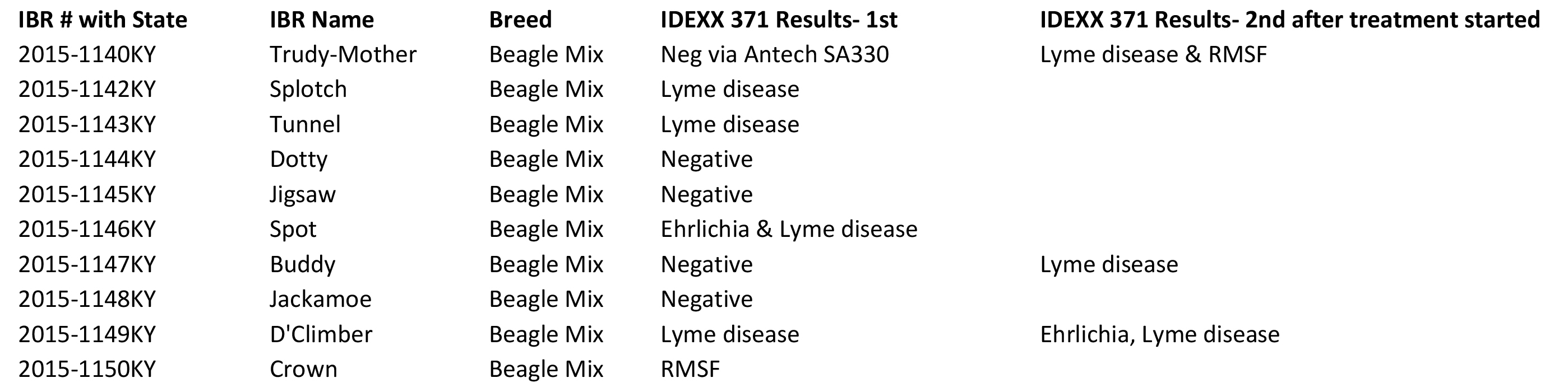
Date of Birth April 23 & 24, 9 puppies. Trudy's Facebook Album Trudy was positive for Lyme disease and Rocky Mountain spotted fever and was a rescue from Mercer County Kentucky. Tester puppy Hudson positive for Lyme disease at 9 weeks old. Trudy is still be tested and treated by her adopter Dr. John Rimkunas annually. Treating her with cipro was life changing for her and helped her overcome some severe anxiety.

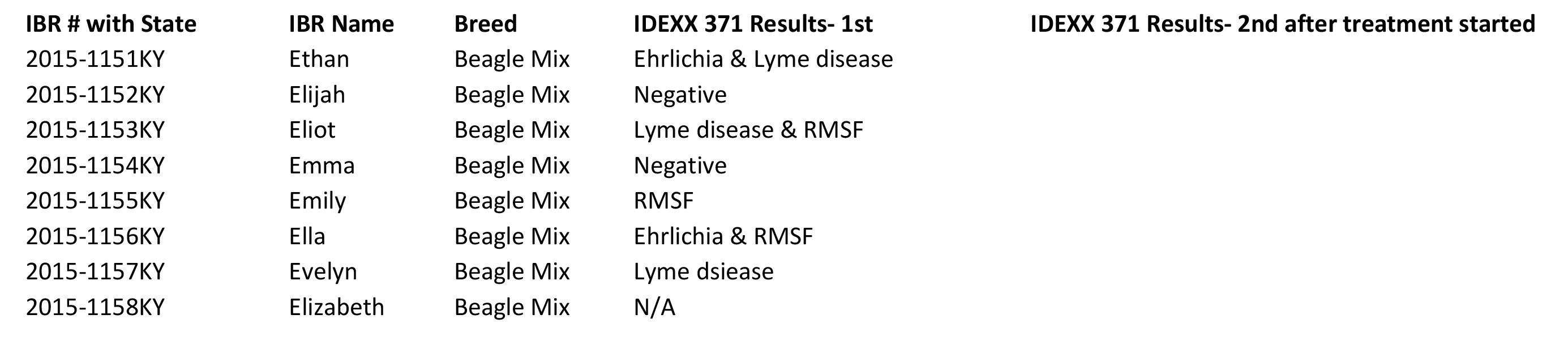



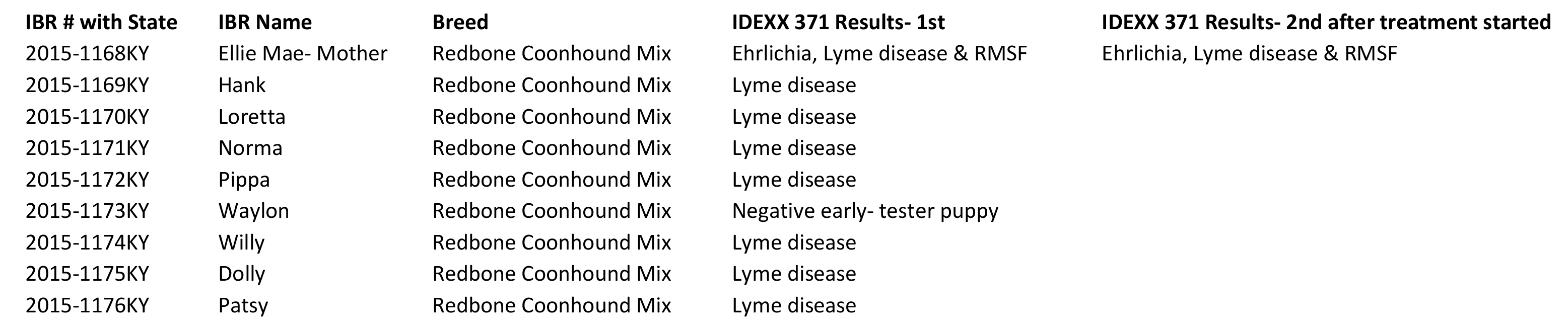







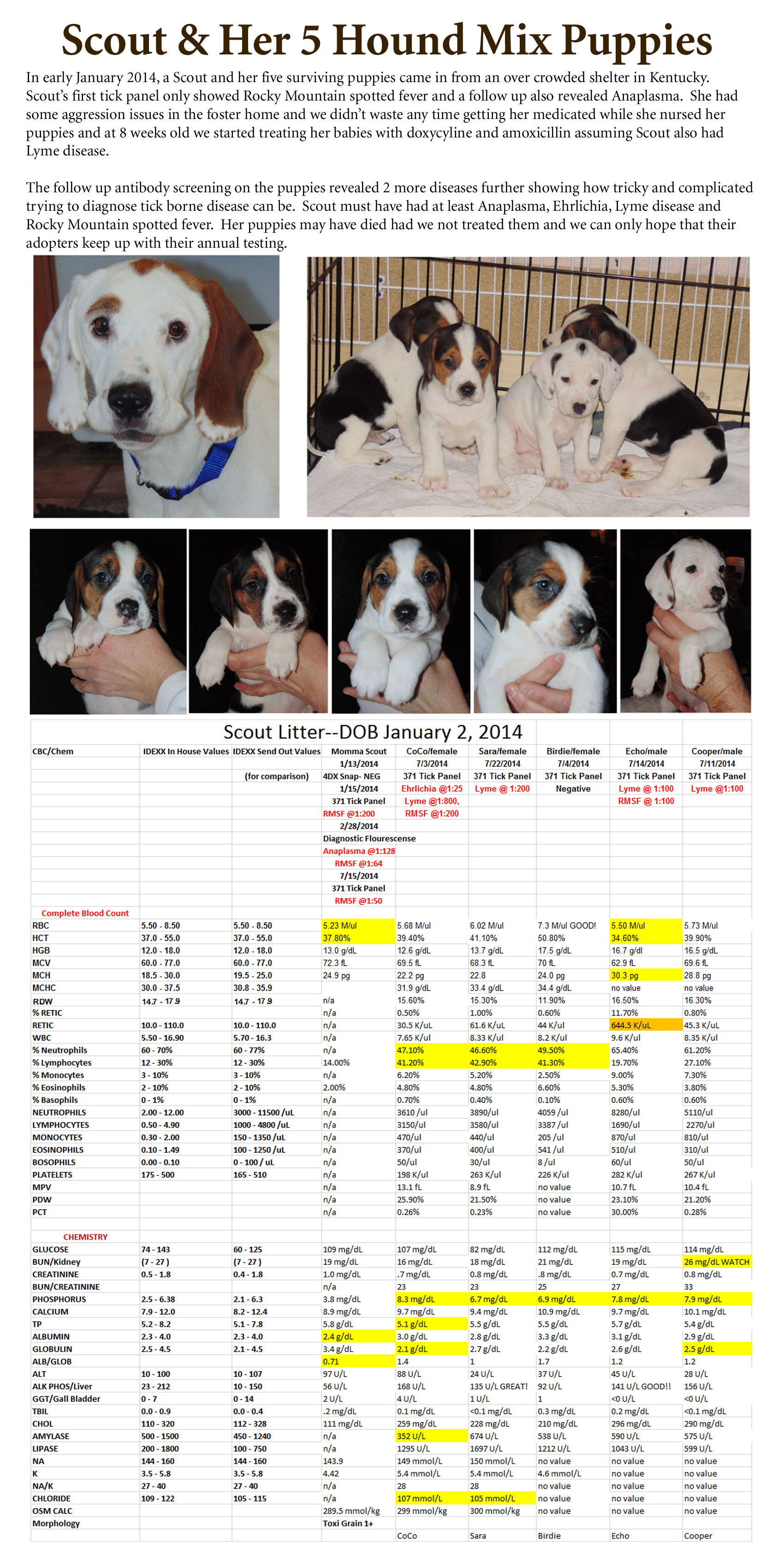
Scout's litter really shows how difficult it is to diagnose disease as she must have been too immuno compromised to show antibodies for the 4 diseases she was infected with. The puppies did GREAT on their proactive meds but we were really surprised when the results started to come in.
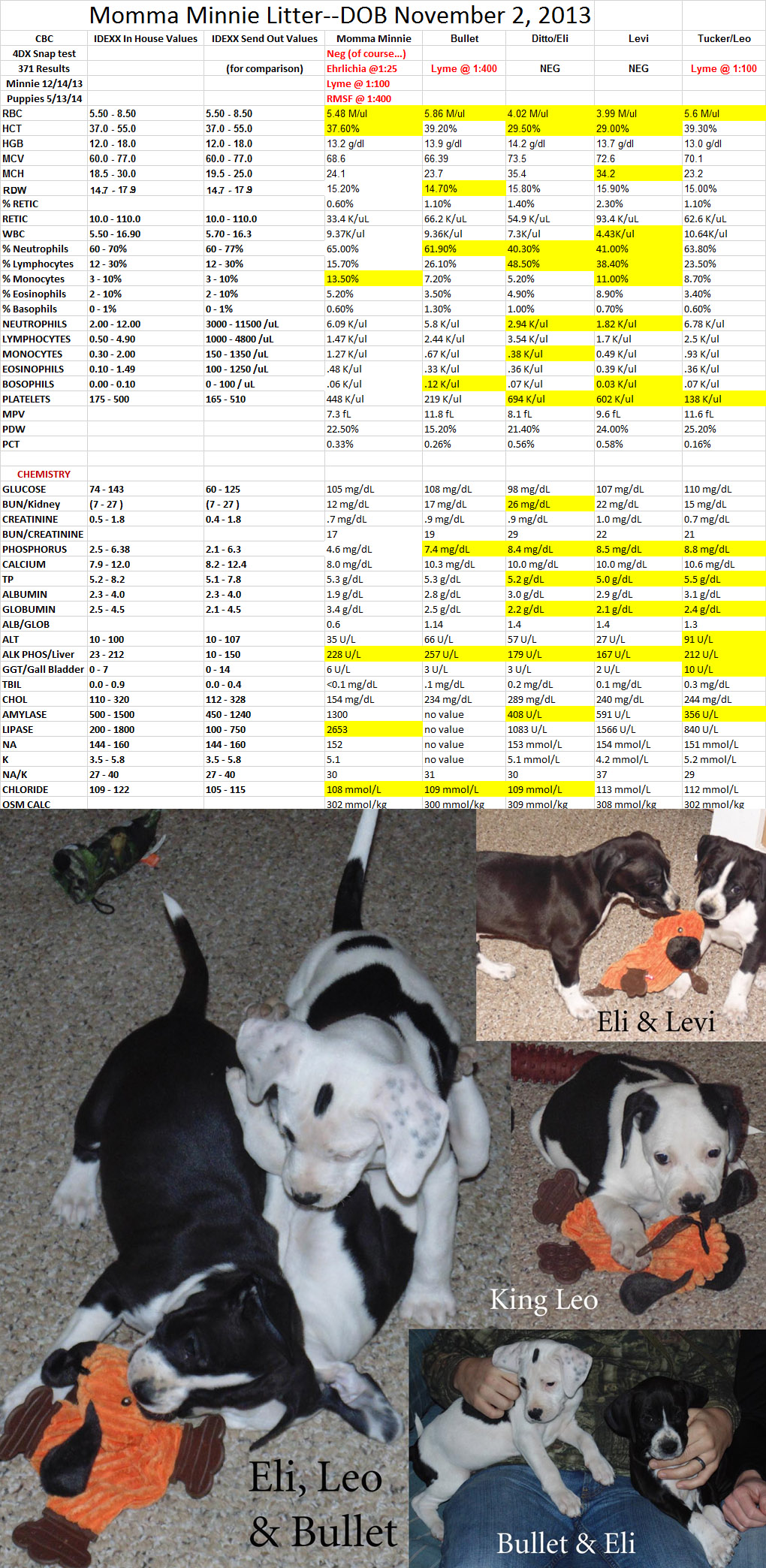


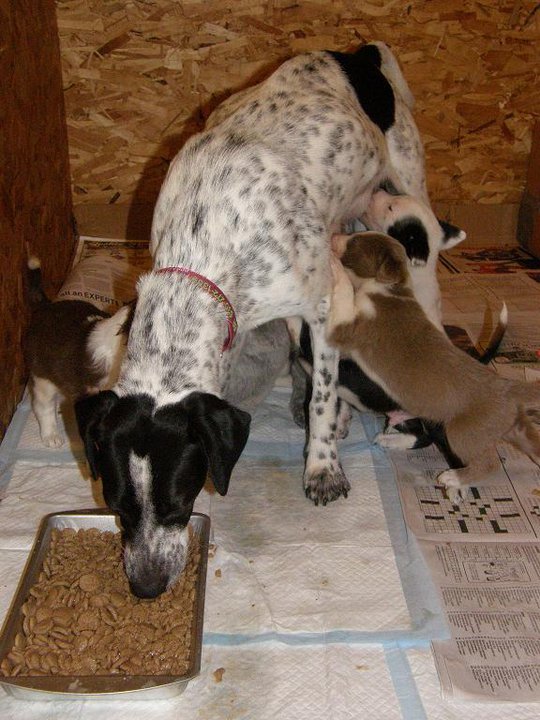 Momma Valentine/Annie Oakley--Ehrlichia, Lyme disease & Rocky Mountain spotted fever (RMSF). |
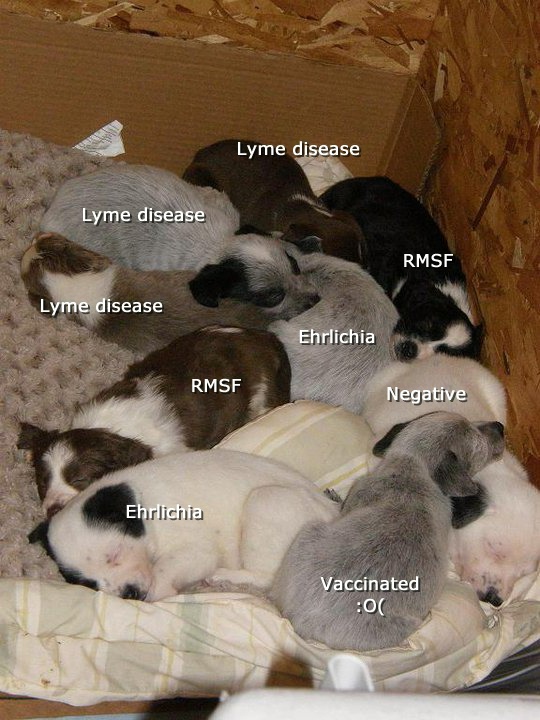
|
 Keely Kenobi/ Franny- Lyme disease |
 Yukiko Windu/ Yuki- Ehrlichia |
 Debby Dooku/ Molly- Ehrlichia |
 Laura Lowbacca/ Bella- Lyme disease |
 Carola Grievous/ Angie- unclear |
 Anne Amidala/ Ginger- RMSF |
 Pat Maul/ Goose- RMSF |
 Eric Vader/ Eric- Lyme disease |
 John Jedi/ Winston- Negative |
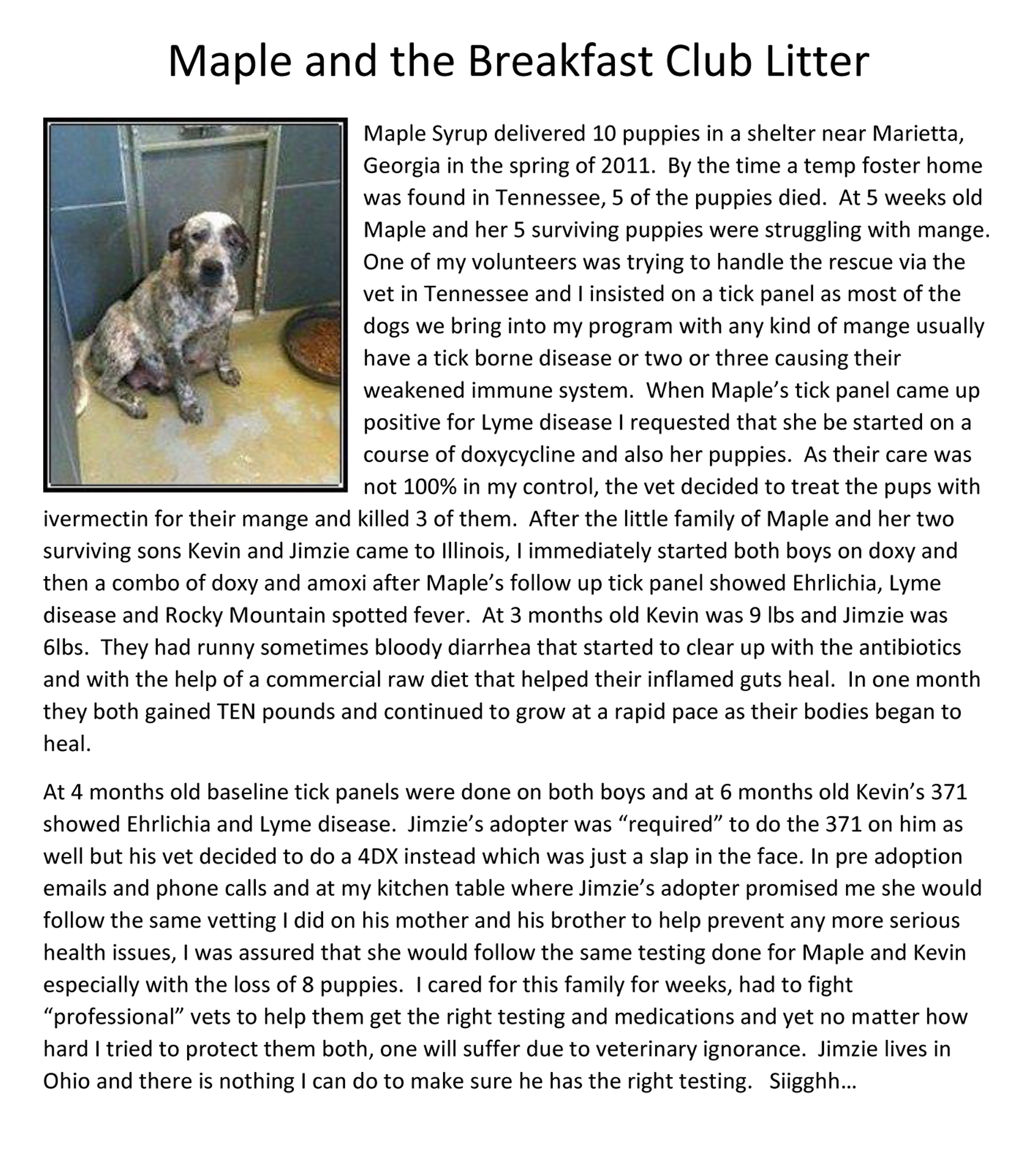


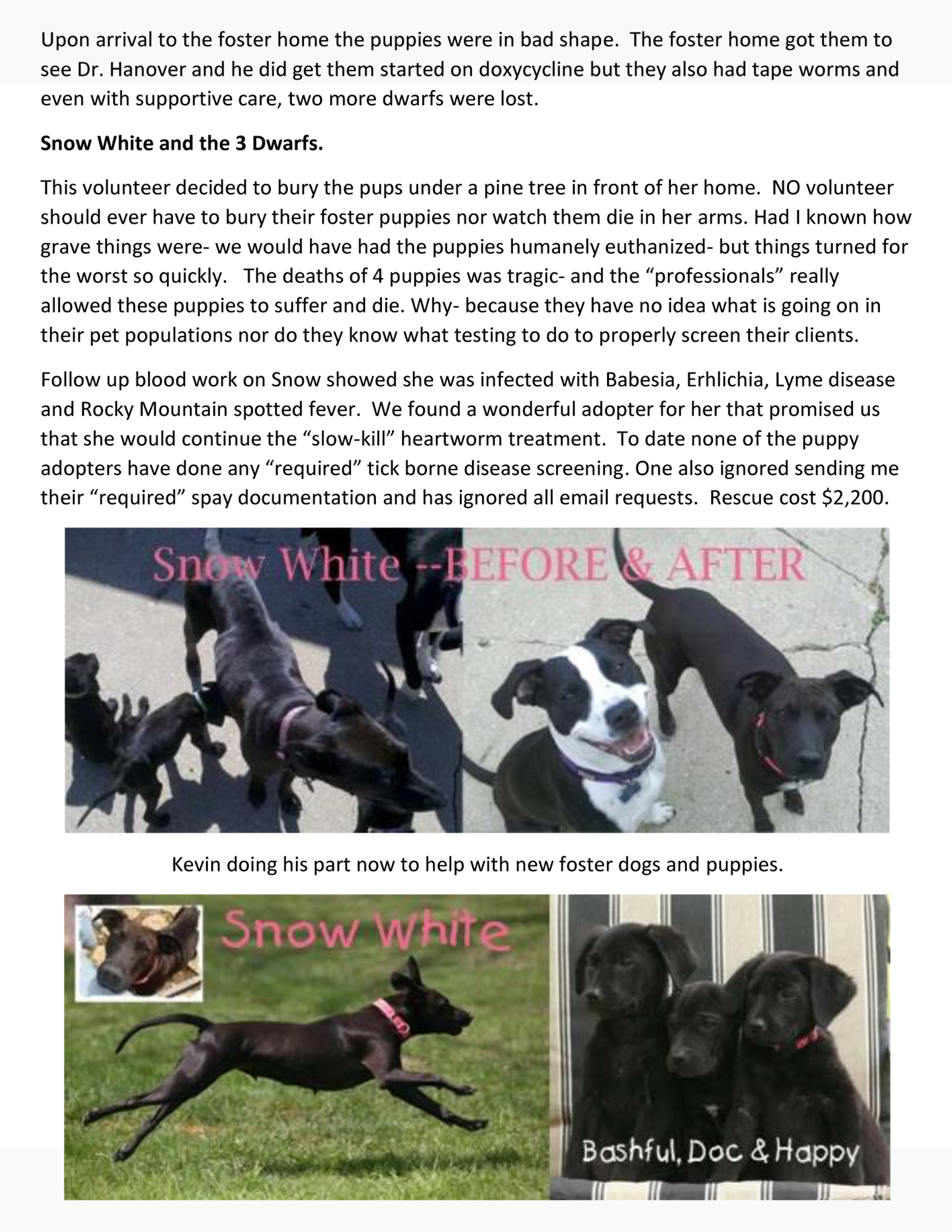









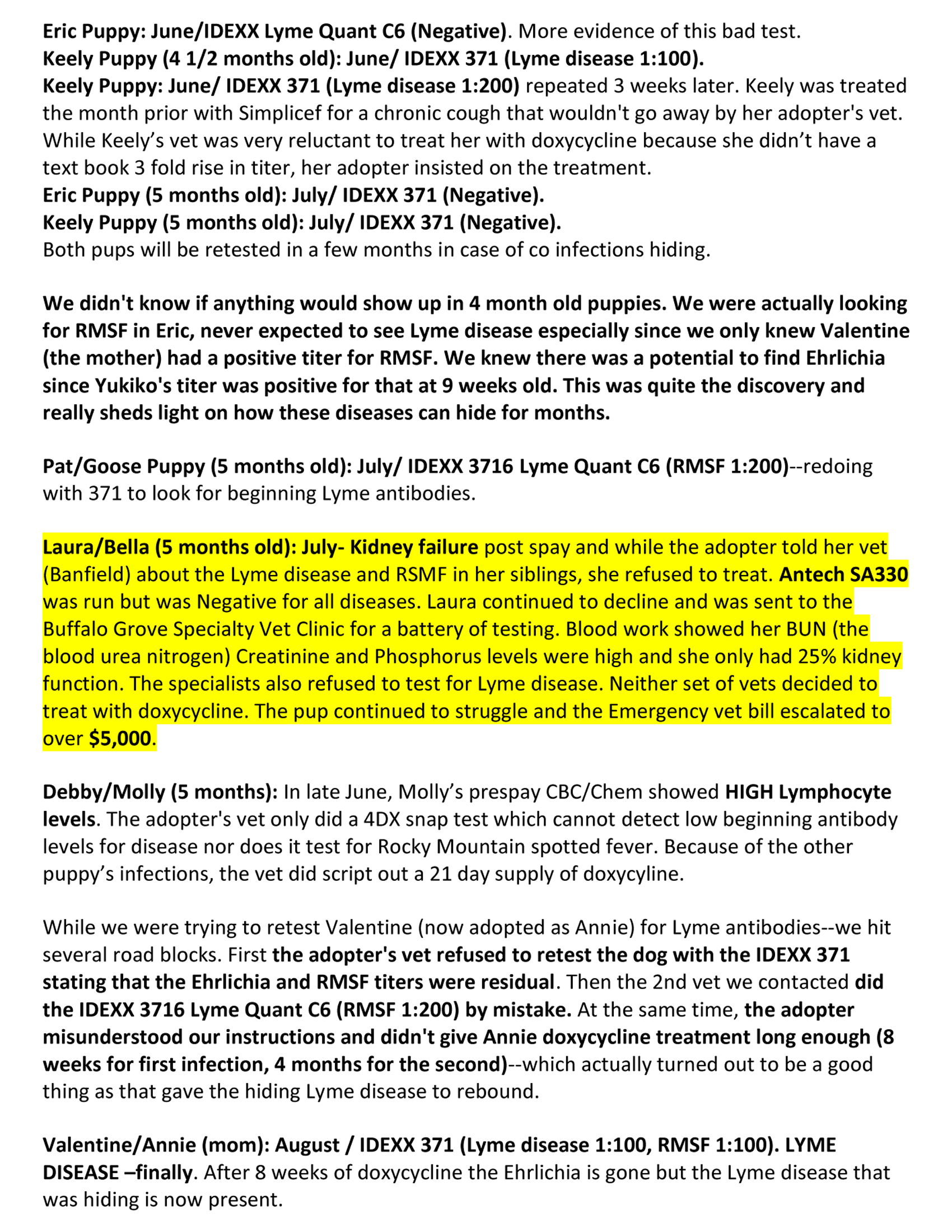
While we are still in the research phase of this important discovery I have a few thoughts. My first theory is that puppies infected from birth must have much more challenged immune systems than non vector borne infected puppies. This might explain why a healthy dog with a new infection can generate high antibodies consistent with what would be considered an active infection compared to a pup that has been infected since birth with a compromised immune system that can't generate antibodies higher than 1:100 for Lyme disease or 1:25 for Ehrlichia, Anaplasma or RMSF via IDEXX 371. These low titers will always be missed with a 4DX Snap test or Lyme Quant C6 and any other testing method that does not go low enough like Michigan State University's test (Lyme disease titers start at 1:160) and also Protatek's lab (Lyme titer starts at 1:640). Often Antech's SA330 will show a Borderline result with a low Lyme titer and that is not considered a treatable infection by many vet standards.
Next, while we have a lot of support from many of our adopter's veterinarians and IBR's own veterinarians across the country, there are many veterinarians that refuse to treat a new infection even when the pup's CBC/Chem shows obvious compromised kidney and liver values besides elevated lymphocytes and neutrophils. This was especially true with five month old Bella's kidney failure due to her Lyme disease infection. What seems to be missing in their understanding about these complicated diseases is that one test is never enough, most ticks transmit more than one disease, and it takes months (4-7) for antibodies to show up in an infected dog or puppy. Also the titer usually starts at 1:25 and then will increase as the body begins to fight the infection generating more antibodies usually causing the level to increase to 1:50, 1:100, 1:200, 1:400, 1:800, 1:1200, 1:1600 on up to 1:3200 and so on. HOWEVER, if the dog or puppy's immune system is already compromised perhaps from an infection from birth, the titer may never go any higher than 1:25 or 1:100. We do find that once treatment starts with antibiotics, the antibody level will increase which may indicate the dog's immune system is starting to work better. Lyme disease is not a bacteria, it is a spirochete and it will migrate into the infected pet's tissues and may lie dormant for months or years all the while causing potential issues like kidney failure and brain damage which could cause other issues like fear aggression, storm anxiety, separation anxiety, etc. Ehrlichia and Rocky Mountain spotted fever will attack the red blood cells and spleen besides causing other troubling health concerns like hearing loss, vision loss including Anterior Uveitis, cataracts and possible blindness. Both diseases will also harm the liver and kidneys much like Lyme disease. We also see a lot of allergy issues in Setters with long term Rocky Mountain spotted fever beside Rage aggression. This is why our early detection, diagnosis and treatment protocols are so important.
To date, I have yet to see any studies by the major testing labs (Antech, IDEXX, Marshfield labs, Protatek) or research Universities on the subject of Vector Borne infected litters and diagnosis and treatment options. I have suggested to the head of a major Vector Borne Disease Lab that perhaps it would be a good idea with all their research technology available to them to bring in an infected pregnant Mother dog and test and retest her puppies for DNA if that is the best conclusive data they need to prove transmission from Mother to pup. I was completely ignored. I also submitted our early data to the head of another Midwest University Vector Borne disease lab and again I was completely ignored. I don't understand why--especially when the percentage of infected pets in the United States is said to be at least 80%.
For now--I will continue to list our data and lab work and success stories and hopefully the information will get to those with an open mind that will take our data seriously. Only time will tell.